jonbeech

About Jon Beech

I joined LASSN as the Director in December 2013. I've a particular interest in mental health, ethnicity, and helping people make sense of their world and their community.

Back to Resources Homepage

Could you be a LASSN Trustee?

Resource Information


2026-07-09T13:39:31+01:007th July, 2026|

LASSN has supported people seeking safety and refugees since 1999.  Last year, our 168 volunteers supported 299 people to make friends, find somewhere safe to stay, learn English, and contribute to life in Leeds. We are looking for up to three new trustees to help guide the charity through a period of high demand and change. You do not need previous trustee experience. We will support you to learn the role. Download the recruitment pack Read the role description Complete the application form Why this matters now LASSN’s work is needed more than ever. People seeking asylum and refugees are facing increasingly hostile policy, fewer rights, deeper poverty, and greater risk of destitution. In Leeds, this means more people needing housing, emergency support, trusted information, and relationships they can rely on. LASSN cannot change the whole system, but we can make sure people are not left to face it alone. Good trustees help LASSN respond with care and clarity. They help us make careful decisions, stay financially sustainable, manage risk, and remain true to our values — especially when the wider environment is uncertain or unjust. We want to strengthen the Board with people who bring the insight, judgement and care LASSN needs for the future. This includes people with personal experience of migration, seeking safety in the UK, or supporting family and communities through the asylum or immigration system. We are also looking ahead, and would particularly welcome people who may have the potential, with support, to grow into senior trustee roles such as Chair or Treasurer in the future. What trustees do Trustees make sure LASSN is focused, effective and well run. The Board: sets strategy and long-term direction oversees finances and sustainability manages risk protects LASSN’s values supports and holds the Director accountable Trustees do not manage staff or run day-to-day services. Who we’re looking for You might be someone who asks good questions, sees the bigger picture, listens carefully, weighs risk, and is willing to make decisions with others. We welcome people from all backgrounds. We are particularly interested in people with experience in: migration, asylum or refugee support finance, budgeting or charity accounts leadership, governance or organisational development fundraising or income generation communications, IT or systems safeguarding, risk or people management local communities, public services or the voluntary sector You do not need to have everything on this list. We are more interested in your judgement, values and ability to think carefully than in job titles. If you care about the work and can contribute thoughtfully, we would like to hear from you. Time commitment The usual commitment is: 6 Board meetings a year 1 planning or strategy day some subcommittee work, usually around 3 hours a month time to read papers before meetings occasional input by email Meetings are hybrid, and trustees can claim out-of-pocket expenses. Interested in finding out more? Please read the recruitment pack and role description for more detail. Download the recruitment pack [...]

LASSN Members Newsletter April 2026

Resource Information


2026-04-28T14:00:22+01:0028th April, 2026|

Every six months, LASSN Members receive a short update on what’s actually happening inside LASSN. what we’re deciding to keep, reduce, or change where pressure is building what’s working in practice (and what isn’t) how trustees are making decisions about sustainability Membership is free and open to anyone who wants to stay connected with LASSN in a meaningful way https://lassn.org.uk/members/

More Than a Match: Finding Community at Headingley Stadium

Resource Information


2026-04-01T09:30:53+01:001st April, 2026|

On Sunday 29th April, a group from LASSN went to Headingley Stadium to watch Leeds Rhinos face top of the table Warrington Wolves in a match celebrating 30 years since the start of the Rugby Super League.  Leeds won 26–22 in a fantastic back-and-forth game. Warrington started well, but Leeds stayed in it as the lead kept changing. A tense final quarter saw Leeds edge ahead and hold on, with the crowd right behind them. We were there thanks to a LASSN volunteer who is a big Rhinos fan, introducing us to staff there that very generously donated hospitality seats. That one conversation meant nine households could go together—many for their first live rugby league game, here or anywhere. And people really got into it, standing, cheering and swept up in the rhythm of the game. One man was dancing at the end, beaming and shouting, “I won, I won!” Another participant said: “I feel freedom. I felt like I wasn’t discriminated against and was just like a citizen here. When they scored, along with the music and the drums, the twinkling lights and the fireworks, I felt so happy.” There’s something powerful about days like this. When we sit together, follow the same match, feel the same buzz when a try is scored. For a while, everything else drops away. We can share something simple and real—and that’s often where a sense of belonging begins. Thank you to Leeds Rhinos—and to our amazing volunteer who made it happen.

What LASSN’s sustainability work changed in 2025

Resource Information


2026-04-14T15:51:27+01:0029th January, 2026|

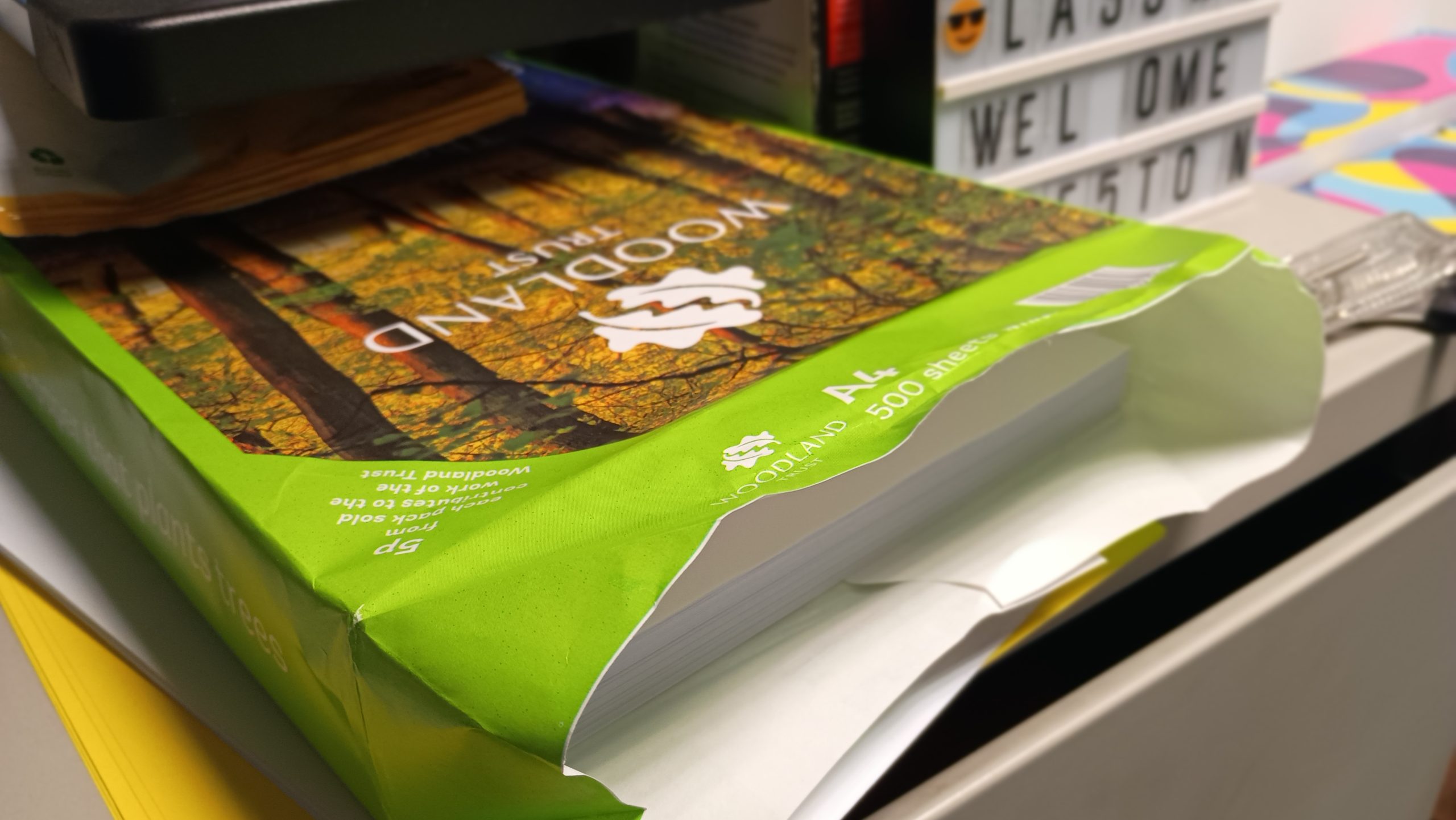
One of the best things about looking back at 2025 is realising how much difference lots of small, everyday decisions have made. In late 2024, we updated our Sustainability Policy, in an attempt to decrease the environmental impact of our work. This wasn’t about grand gestures or shiny new initiatives. It was about noticing the things we could do a bit better, and then actually doing them: taking the bus instead of the car, printing one page less, reusing what we already have. None of it dramatic. All of it cumulative. We agreed to review our progress in January 2025 and here is what we found. Getting around Leeds, differently Travel is a good place to start, because it shows how much volunteer and staff choices matter. Compared to last year: Bike claims are up 10% Train claims are up 14% Bus claims are up nearly 27% Car claims are down almost 28% More cycling, more buses and trains. Fewer car journeys. That isn’t abstract “carbon saving”. It’s people taking the bus to visit a learner, cycling to a meeting, or getting the train instead of driving across the city. Those choices really do add up — thank you. Printing less (and wasting less) We’ve also quietly changed how we use paper. All printing and copying is now on 100% recycled paper, and we’re printing less overall. As a result: Spending on printer toner is down 25% Spending on paper is down 7% Behind the scenes, we’re reusing scrap paper where it makes sense, keeping an eye on printing trends, and recycling used cartridges. None of it glamorous — but it means less waste, fewer trees, and lower costs. Buying better (and buying less) We’ve cut back on big suppliers (Amazon, Curry's), been more careful about what we buy and when. Non-urgent buying is now slower and more considered, often from smaller or more ethical suppliers. Overall, purchasing is down 33% year on year. We’re also reusing more. Staff phones were bought second-hand, equipment is kept in use for longer, and our Christmas decorations are now stored and reused rather than replaced every year. And yes — the coffee matters too Both caffeinated and decaf office coffee are now Fairtrade by default. Same for the teabags and sugar. Warmer homes, lower energy use Across LASSN houses we focused on the basics that make a real difference: Draught excluders fitted throughout All new appliances are energy-efficient (A-rated or better) A switch to a green electricity tariff A Green Doctor visit to sense-check what we’re doing Some of the bigger jobs — insulation and glazing in particular — depend on landlords, so they take time. But progress is happening, step by step. Learning and sharing Sustainability is now built into our English at Home online resources, with sections on environmental issues, travel, recycling and energy use. These will be used more actively in sessions over 2026 — helping learners (and tutors) talk about sustainability in everyday, practical ways. What this means for [...]

Friends of LASSN – New Year 2026

Resource Information


2026-01-29T10:59:52+00:0016th January, 2026|

Our latest Friends of LASSN newsletter is out, and it offers a snapshot of life at LASSN right now. Inside, you’ll find moments from across our work — how people are being supported, what volunteers and staff have been busy with, and how your time, care and donations are making a difference day to day. We’re also sharing reflections on what’s changing, what’s staying the same, and how we are trying to spread our values and influence. It’s a mix of stories, updates and behind-the-scenes glimpses that show how the work fits together — from practical support to longer-term change. Whether you’re closely involved already or simply like to keep in touch with what’s happening, we hope it gives you a clear sense of where we’re at, and where we’re heading next. Thanks, as always, for being part of the LASSN community.

English at Home: 2025 – our Lottery report

Resource Information


2026-04-28T12:53:58+01:0015th January, 2026|

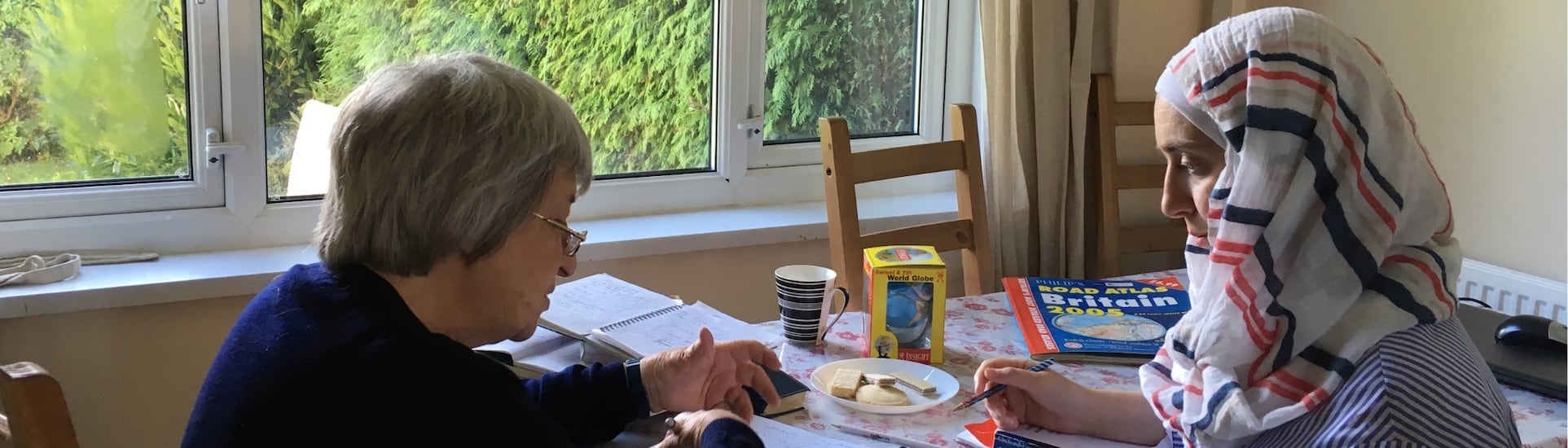
In November 2025, LASSN’s three-year National Lottery funding for English at Home came to an end. This page shares highlights from our final report, covering the last year of funding and the difference it made. During this final year, 96 learners were supported by 82 volunteer tutors, with 55 new learner–tutor matches. Across the full three-year programme, English at Home supported 169 learners and 124 volunteers — building hundreds of one-to-one relationships rooted in trust, patience and care The impact in this final year was clear. Everyone who had a tutor for more than a month told us their confidence and independence improved. Learners used their English to do things many of us take for granted — speaking to doctors, helping their children at school, travelling independently, joining groups, volunteering, and moving towards work. One learner reflected:“Before I had a teacher visit my home, I knew nothing and my eyes were closed. Now they are wide open.” This final year also showed how important English at Home is in reducing isolation and building belonging. Learners talked about making friends, feeling safer, and becoming part of their local communities — even during a period of growing hostility and anxiety. Volunteers felt the impact too. As one tutor put it:“Nothing is stronger than a community built on understanding and love.” As Lottery funding ends, this final report captures what English at Home has consistently shown: steady, relationship-based support works — and its value goes far beyond language. Read the full report here

The Why of LASSN – Houses

Resource Information


2025-10-23T11:29:14+01:0030th November, 2025|

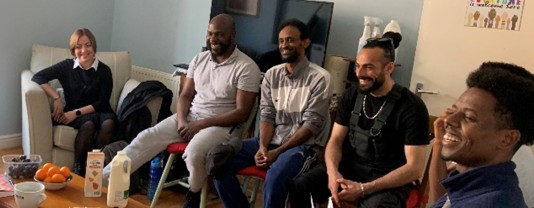
This article is part of our ongoing series exploring not just what LASSN does, but why it matters. Our shared houses—Grace, Eva and Kay—are ordinary homes made extraordinary by those within. They began as quiet gestures of trust, shaped by neighbours, volunteers and the men who now live there. Together they’ve become places of safety, dignity and shared belonging in Leeds. A home shaped by everyday decency There’s nothing unusual about the streets where these houses stand—and that’s the point. Each looks like any other terrace: a door, a garden, a kettle always on. Inside, people who once had nowhere to go share the gentle rhythms of daily life—cooking, cleaning, waiting for the washing machine to finish. For the first time in months, sometimes years, they have keys of their own. "They aren’t shelters; they’re homes. That’s the difference.” - Houses Volunteer Roots in generosity Eva and Grace Houses exist because two Leeds residents bought properties for LASSN to use rent-free. Their running costs were first covered by a legacy from Eva Pinthus, whose belief in welcome still echoes in the name above the door. Kay House was bought with another generous legacy and refurbished in 2025 to high environmental standards with help from Leeds Building Society Foundation. Each was founded on a shared conviction: that dignity begins with a stable place to live. How a house becomes a home There are no staff on site, no curfews, no signs outside. Residents decide how the house runs, share chores and agree what fairness looks like. House rules are written together, balancing safety with freedom. Neighbours know who lives there—and often lend a hand or a smile. These houses have quietly become part of their streets: neither hidden nor singled out, simply accepted. “It’s a nice, calm place. The people I live with are like family, and we help each other.” — Eva House guest Life begins to stretch again Many men arrive tired and wary after months of rough sleeping. Over time, routines settle in: shared meals, volunteering, college courses, language classes. One resident calls Grace House “a place that lets me breathe before I start again.” Support volunteers drop by each week, helping with letters, liaising with caseworkers, or just sharing a cup of tea. There’s laughter, the odd argument, and recovery—the texture of normal life returning. "Today we played table tennis, chatted, and laughed together — and for a little while, they forgot their situation. Seeing their peace and happiness reminded me why I volunteer. It gives me so much back in return." - House Volunteer What safety looks like You can measure success in the number of nights people spent indoors, but the real change is subtler: it's also a man buying groceries for the first time, opening a letter without fear, a neighbour waving at the bus stop. “Whenever someone asks where I live, I tell them I live in a palace.” — House guest Belonging, brick by brick Grace, Eva and Kay Houses show that [...]

The Why of LASSN – Free Teaching Resources

Resource Information


2026-04-15T13:28:09+01:0022nd November, 2025|

English at Home volunteers often say they learn as much as they teach. Our free online resources were born from that exchange. With their help, we've created a living library where ideas and experience circulate freely between tutors, learners and partners. Learning that builds safety Finding a new life begins with finding the words. For refugees and people seeking sanctuary, English is the bridge between isolation and connection. For volunteers, it’s a way to share insight and confidence. That’s why LASSN’s free resources exist: practical tools written and refined by those who know what starting over really means. Shared learning, shared strength English at Home has always been about connection, not classrooms. Volunteers meet learners in living rooms, libraries or online, using materials grounded in real life—GP visits, job interviews, school letters, small talk. “I used to be afraid to speak. Now I can help my daughter with her homework—and chat to my neighbour.” — Learner Where language meets trust Learning English is also about rebuilding confidence.When tutors and learners share stories, they rebuild trust as well as vocabulary. A lesson might drift into recipes, laughter or cultural exchange; both sides grow from it. “I learn every week—not just English, but how to listen.” — Volunteer tutor Knowledge that travels Today, these free materials reach far beyond Leeds— they've been downloaded by more than 800 tutors from across 16 countries in 2024–25. Whoever uses them extends the same spirit of solidarity: knowledge shared freely, confidence shared in return. The architecture of shared knowledge Behind every download is a small act of belonging—a volunteer preparing, a learner practising, a teacher adapting a worksheet. These resources turn learning into connection. They show that safety is built not only with walls but with understanding—language as shelter — shared, sturdy, and close at hand. by Jon Beech Click here to see our Free Teaching Resources

New L1 Interference Guides to help English tutors teach with more confidence

Resource Information


2026-01-08T09:35:15+00:0013th November, 2025|

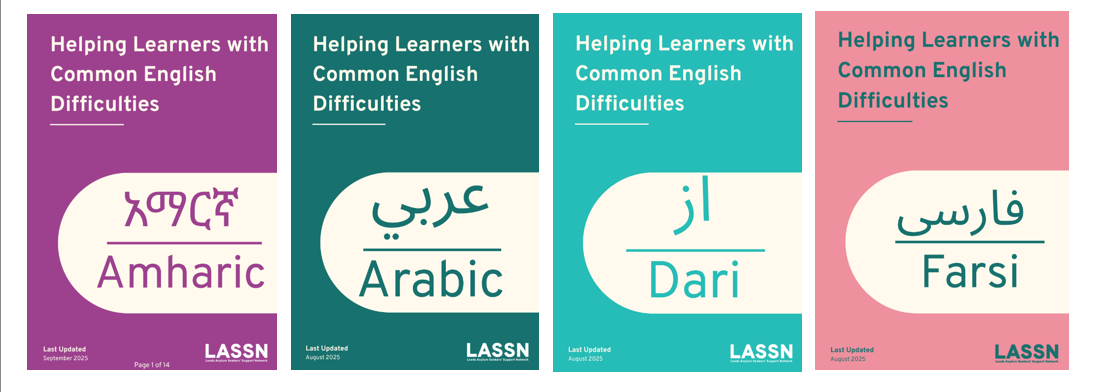
Supporting someone to learn English when their first language works very differently can feel tricky at times — especially when you’re not sure why certain words, sounds or structures are proving hard. Many volunteers tell us they sometimes worry about “getting it wrong” or not knowing the best way to help. To make things easier, we’ve created a new set of L1 Interference Guides. They give a simple overview of how different home languages work, the kinds of challenges learners often face when moving into English, and a few practical ideas you can use straight away. They’re short, friendly, and designed for real volunteer sessions — no linguistics degree required. The first guides cover: Amharic Arabic Dari Farsi Hindi Kurdish (Sorani) Pashto Urdu We’ll keep adding more as we go. so if there’s a language you’d love us to include next, please let us know.

Go to Top