“When I got my status, I felt both happy and lost. For the first time I could decide things for myself—but I didn’t know where to start. Finding clear information helped me stand up again and see where my life could go.” — Charles
Recognition brings freedom, but the map can sometimes still feel blank. Letters arrive in official English; buses follow unseen rules; GP forms make assumptions. Even topping up a travel card can feel like a test. New to Leeds turns confusion into orientation—and orientation into confidence.
Information that builds confidence
Access to information shapes access to everything else: housing, healthcare, education, friendship. That’s why New to Leeds is written and updated by refugees themselves—people who know which answers matter first.
“The more I know, the more confident I feel to go out, speak, and take part in life here.” — Tea & Talk participant
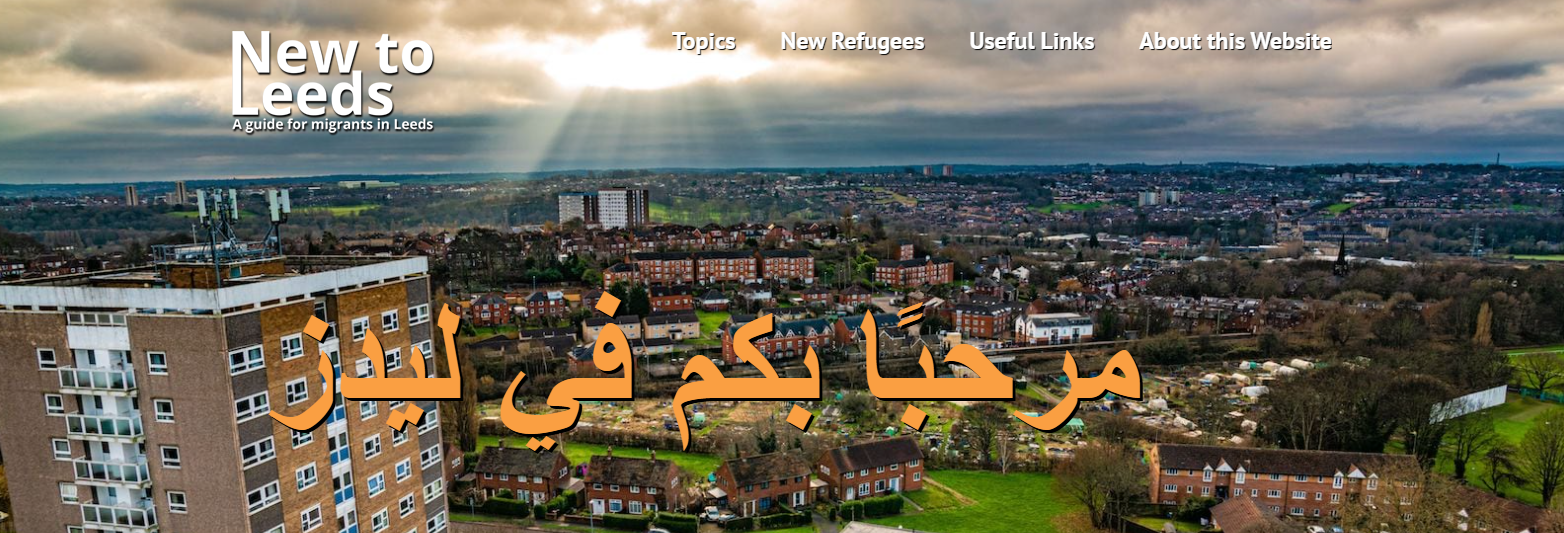
It’s a living guide to Leeds: where to find homes, classes, legal advice, food, faith groups and community—written in clear English and translated into fifty languages.
From isolation to insight
When you’ve been displaced, even catching the right bus can feel like an exam you haven’t revised for. Each page of New to Leeds replaces uncertainty with understanding. Someone who once felt “like a football kicked from one end to another” can now plan journeys, reach services and rebuild control.
From navigation to contribution
Every answer sparks action. People use the site to enrol at college, volunteer, start work, or simply feel ready to explore.
“When I explain something I once struggled with, I feel strong—because now I’m the teacher.” — Early contributor
Knowledge that multiplies
The power of New to Leeds lies not just in its facts but in the trust it builds—each update a small act of solidarity, one refugee helping another avoid the wrong turn.
“You can’t always change the system, but when you share knowledge, you change how it feels to live inside it.” — Recent editor
The power of knowing
Behind every click is someone reclaiming agency. New to Leeds shows that information isn’t optional—it’s safety, dignity, and the first step toward belonging.
by Jon Beech