One of the best things about looking back at 2025 is realising how much difference lots of small, everyday decisions have made.
In late 2024, we updated our Sustainability Policy, in an attempt to decrease the environmental impact of our work.
This wasn’t about grand gestures or shiny new initiatives. It was about noticing the things we could do a bit better, and then actually doing them: taking the bus instead of the car, printing one page less, reusing what we already have. None of it dramatic. All of it cumulative.
We agreed to review our progress in January 2025 and here is what we found.
Getting around Leeds, differently
Travel is a good place to start, because it shows how much volunteer and staff choices matter.
Compared to last year:
- Bike claims are up 10%
- Train claims are up 14%
- Bus claims are up nearly 27%
- Car claims are down almost 28%
More cycling, more buses and trains. Fewer car journeys.
That isn’t abstract “carbon saving”. It’s people taking the bus to visit a learner, cycling to a meeting, or getting the train instead of driving across the city. Those choices really do add up — thank you.
Printing less (and wasting less)
We’ve also quietly changed how we use paper.
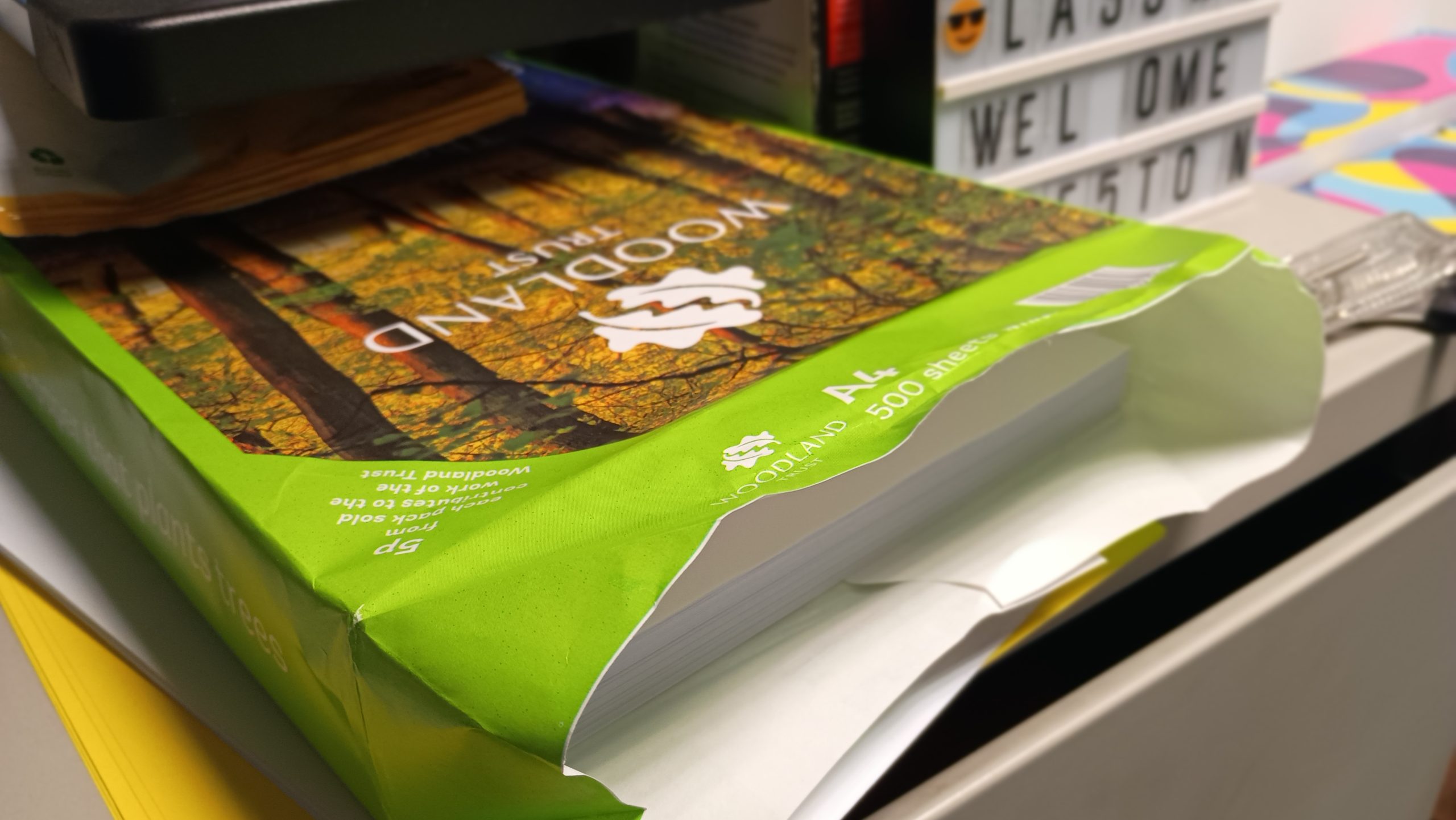
All printing and copying is now on 100% recycled paper, and we’re printing less overall. As a result:
- Spending on printer toner is down 25%
- Spending on paper is down 7%
Behind the scenes, we’re reusing scrap paper where it makes sense, keeping an eye on printing trends, and recycling used cartridges. None of it glamorous — but it means less waste, fewer trees, and lower costs.
Buying better (and buying less)
We’ve cut back on big suppliers (Amazon, Curry’s), been more careful about what we buy and when. Non-urgent buying is now slower and more considered, often from smaller or more ethical suppliers. Overall, purchasing is down 33% year on year.
We’re also reusing more. Staff phones were bought second-hand, equipment is kept in use for longer, and our Christmas decorations are now stored and reused rather than replaced every year.
And yes — the coffee matters too
Both caffeinated and decaf office coffee are now Fairtrade by default. Same for the teabags and sugar.
Warmer homes, lower energy use
Across LASSN houses we focused on the basics that make a real difference:
- Draught excluders fitted throughout
- All new appliances are energy-efficient (A-rated or better)
- A switch to a green electricity tariff
- A Green Doctor visit to sense-check what we’re doing
Some of the bigger jobs — insulation and glazing in particular — depend on landlords, so they take time. But progress is happening, step by step.
Learning and sharing
Sustainability is now built into our English at Home online resources, with sections on environmental issues, travel, recycling and energy use. These will be used more actively in sessions over 2026 — helping learners (and tutors) talk about sustainability in everyday, practical ways.
What this means for 2026
Next year is about doing more of what’s already working:
- More walking, cycling, buses and trains
- Less printing, fewer disposables, more reuse
- Making energy saving and recycling easier in houses
- Talking about sustainability more — in sessions, newsletters and team meetings
If there’s one takeaway, it’s this: the everyday choices you’re already making are shifting how LASSN works.
So thank you to everyone who volunteers and works for LASSN – for taking the bus, turning off the light, reusing the thing, or pausing before buying something new. It all counts — and we’re glad you’re part of it.
Jon Beech, Director