This article is part of our ongoing series exploring not just what LASSN does, but why it matters.
Our shared houses—Grace, Eva and Kay—are ordinary homes made extraordinary by those within.
They began as quiet gestures of trust, shaped by neighbours, volunteers and the men who now live there. Together they’ve become places of safety, dignity and shared belonging in Leeds.
A home shaped by everyday decency
There’s nothing unusual about the streets where these houses stand—and that’s the point. Each looks like any other terrace: a door, a garden, a kettle always on. Inside, people who once had nowhere to go share the gentle rhythms of daily life—cooking, cleaning, waiting for the washing machine to finish. For the first time in months, sometimes years, they have keys of their own.
“They aren’t shelters; they’re homes. That’s the difference.” – Houses Volunteer
Roots in generosity
Eva and Grace Houses exist because two Leeds residents bought properties for LASSN to use rent-free. Their running costs were first covered by a legacy from Eva Pinthus, whose belief in welcome still echoes in the name above the door. Kay House was bought with another generous legacy and refurbished in 2025 to high environmental standards with help from Leeds Building Society Foundation.
Each was founded on a shared conviction: that dignity begins with a stable place to live.
How a house becomes a home
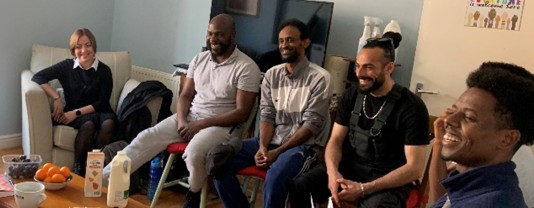
There are no staff on site, no curfews, no signs outside. Residents decide how the house runs, share chores and agree what fairness looks like. House rules are written together, balancing safety with freedom.
Neighbours know who lives there—and often lend a hand or a smile. These houses have quietly become part of their streets: neither hidden nor singled out, simply accepted.
“It’s a nice, calm place. The people I live with are like family, and we help each other.” — Eva House guest
Life begins to stretch again
Many men arrive tired and wary after months of rough sleeping. Over time, routines settle in: shared meals, volunteering, college courses, language classes. One resident calls Grace House “a place that lets me breathe before I start again.”
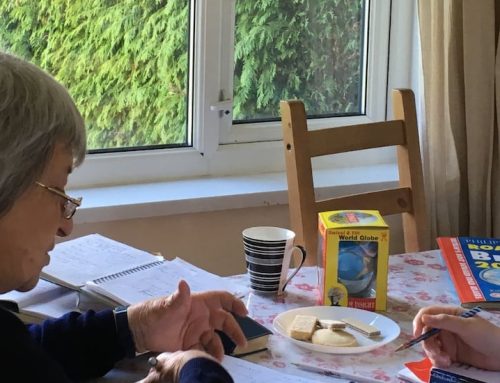
Support volunteers drop by each week, helping with letters, liaising with caseworkers, or just sharing a cup of tea. There’s laughter, the odd argument, and recovery—the texture of normal life returning.
“Today we played table tennis, chatted, and laughed together — and for a little while, they forgot their situation. Seeing their peace and happiness reminded me why I volunteer. It gives me so much back in return.” – House Volunteer
What safety looks like
You can measure success in the number of nights people spent indoors, but the real change is subtler: it’s also a man buying groceries for the first time, opening a letter without fear, a neighbour waving at the bus stop.
“Whenever someone asks where I live, I tell them I live in a palace.” — House guest
Belonging, brick by brick
Grace, Eva and Kay Houses show that safety can be homemade. They’re built not by policy but by persistence, generosity and trust between neighbours. Together they remind Leeds that belonging is something we build—quietly, locally, and for everyone.
by Jon Beech and Jo Carter
Find out more about becoming a House Volunteer here.